Table of Contents
- When Your Child Feels Overwhelmed… and You’re Not Sure What Helps
- What Are Sensory Play Strategies (and Why Do They Work?)
- How Do Sensory Play Strategies Support Emotional Calmness?
- What Does Emotional Dysregulation Look Like Day-to-Day?
- Signs Your Child May Need Sensory-Based Emotional Support
- What This Looks Like Day-to-Day
- Sensory Activities for Emotional Calmness You Can Try at Home
- Using Art as Sensory-Based Emotional Support
- What to Do (and What Not to Do)
- Somatic Regulation Techniques for Children
- Calming Strategies for Neurodivergent Children
- Why Typical Approaches Can Fall Short
- Effective Strategies That Help
- How ABA Therapy with Sensory Integration Helps
- Play Therapy Techniques for Anxiety
- Neurofeedback Therapy and Anxiety in Children
- Getting Started: What Support Can Look Like for Your Child
- Quick Takeaways You Can Use This Week
- What Families in Whitby Should Know
- Additional FAQs: Sensory Play & Emotional Calmness
When Your Child Feels Overwhelmed… and You’re Not Sure What Helps
Sometimes it’s not one big moment—it’s a pattern that slowly builds.
Your child might become upset over small changes, have a hard time settling after a long day, or seem constantly “on edge” in situations that didn’t used to be difficult. You try to help, but nothing seems to work the way you expect it to.
At some point, many parents start asking:
Why are these reactions happening so quickly?
Why don’t typical calming strategies seem to help?
What actually makes a difference day-to-day?
This is where sensory play strategies can offer a different starting point.
Rather than focusing only on behavior, these approaches support the body first. They use simple, sensory-based experiences to help children feel more settled, safe, and in control—especially when emotions feel overwhelming.
Whether your child is neurodivergent or simply more sensitive to stress, sensory-based emotional support can help bring things back to a more manageable place.
Often, what looks like a behavioral challenge is really a nervous system that’s overloaded. When we begin by supporting regulation at the body level, emotional responses tend to become easier to navigate.
What Are Sensory Play Strategies (and Why Do They Work?)
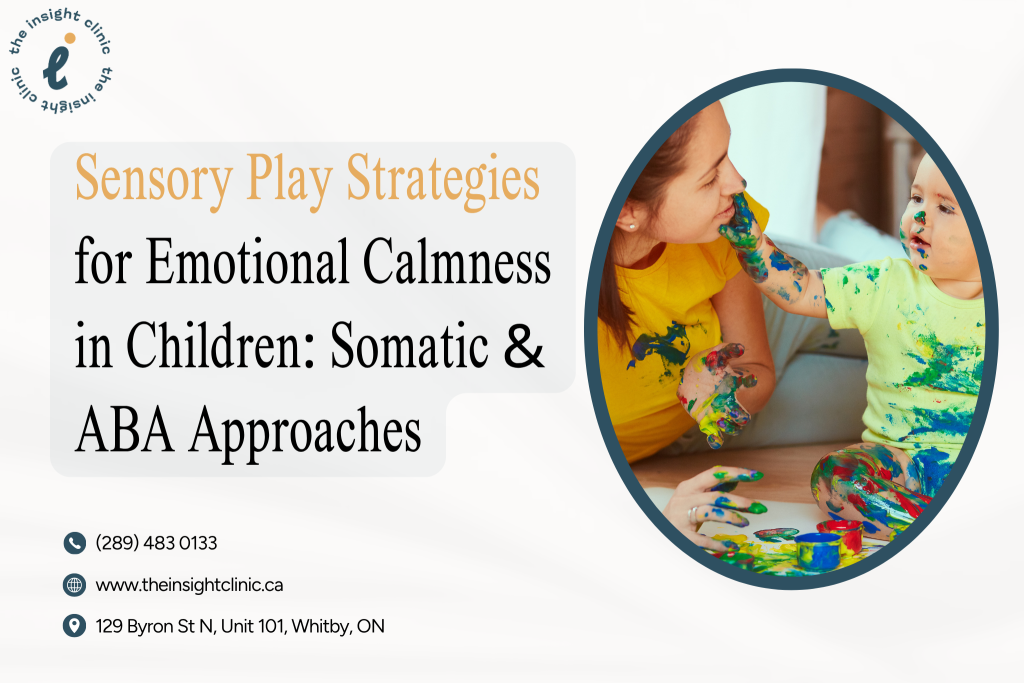
Sensory play strategies are activities that engage your child’s senses—touch, movement, sound, and more—to help regulate their nervous system.
In simple terms: when a child’s body feels calm, their emotions become easier to manage. Sensory play can look simple—swinging, jumping, exploring textures like sand or playdough, or listening to calming sounds. These experiences help children feel more grounded and in control.
What’s important to understand is that different children respond to different types of sensory input. Some children calm down with movement, while others need stillness or deep pressure. Others may seek sensory input throughout the day to stay regulated.
Part of the process is noticing patterns:
- When does your child become overwhelmed?
- What seems to help them settle more quickly?
- What types of input do they naturally seek out or avoid?
These observations can guide you toward strategies that are actually effective for your child—not just what works “in general.”
How Do Sensory Play Strategies Support Emotional Calmness?
Children don’t always have the words to explain how they feel. But their bodies tell the story.
Sensory play strategies help by:
- Calming the nervous system
- Reducing anxiety and overwhelm
- Improving focus and transitions
- Building body awareness (also called somatic awareness)
Over time, these experiences don’t just help in the moment—they build a child’s ability to recognize early signs of overwhelm and respond before emotions escalate.
While sensory play can happen at home, it’s also the foundation of approaches like:
- Play therapy in Ontario
- ABA therapy with sensory integration
- Neurofeedback therapy for anxiety
These approaches are often used in more structured ways in therapy settings, including at The Insight Clinic in Whitby—but many of the same ideas can start at home in simple, practical ways.
What Does Emotional Dysregulation Look Like Day-to-Day?
Sometimes emotional struggles aren’t obvious at first. They show up in everyday moments.
A child might seem “fine” one minute and overwhelmed the next. Transitions, sensory overload, or small frustrations can quickly build into bigger reactions.
You might notice patterns like:
- A smooth morning suddenly turning into a meltdown
- Small requests leading to big reactions
- Difficulty shifting from one activity to another
Over time, this can affect how children connect, learn, and manage everyday situations—especially if they don’t yet have the tools to regulate their responses.
Signs Your Child May Need Sensory-Based Emotional Support
- Big reactions to small frustrations
- Trouble calming down after being upset
- Sensitivity to noise, textures, or crowds
- Difficulty focusing or transitioning
These signs don’t mean something is “wrong.” They often mean your child needs more support learning how to regulate their nervous system and respond to sensory input in a way that feels manageable.
What This Looks Like Day-to-Day
Parents in Durham Region often describe:
- Morning routines turning into battles
- Homework leading to shutdown or frustration
- Overwhelm in social settings
- Difficulty settling at bedtime
These patterns can feel exhausting—but they’re also helpful signals. They show when your child may be reaching their limit and could benefit from sensory input, structure, or breaks before things escalate.
If this sounds familiar, sensory activities for emotional calmness can help create more predictable, manageable moments throughout the day.
Sensory Activities for Emotional Calmness You Can Try at Home
You don’t need special equipment to start. Many effective emotional regulation activities for kids are simple and low-cost.
These emotional regulation activities for kids can be adjusted based on your child’s needs and preferences.
The goal isn’t to “fix” emotions—it’s to support your child’s body so emotions feel more manageable.
Here are three simple sensory activities you can start this week:
1. Deep Pressure (Calming the Body)
- Tight hugs (if your child enjoys them)
- Weighted blankets
- Rolling a ball over arms and legs
Deep pressure can help children feel more secure and grounded, especially during moments of overwhelm. It provides consistent input to the body, which can reduce restlessness and increase a sense of stability.
2. Water Play (Soothing and Predictable)
- Warm baths
- Pouring water between cups
- Playing with bubbles
Water offers repetitive, predictable sensory input. For many children, this can feel organizing and calming—especially after stimulating or busy parts of the day.
3. Movement (Releasing Energy)
- Jumping on a trampoline
- Swinging
- Animal walks (bear crawl, crab walk)
Movement helps release built-up energy and can improve focus afterward. Some children need movement before they can sit, listen, or transition effectively.
These activities can help your child feel more settled and return to a calmer state more easily. You may notice that certain strategies work better at different times of day—this is completely normal.
Using Art as Sensory-Based Emotional Support
Creative activities are powerful tools for sensory-based emotional support.
Try:
- Drawing feelings with colors
- Using clay or playdough to release tension
- Listening to music and moving to the rhythm
Art allows children to express emotions without needing to explain them verbally. For some children, this can feel safer and more accessible—especially when emotions are difficult to put into words.
Art and music therapy are often used to help children express emotions in ways that feel safe and engaging—something you’ll see in settings like The Insight Clinic in Whitby.
What to Do (and What Not to Do)
Do:
- Follow your child’s lead
- Keep activities simple
- Be consistent
Don’t:
Struggling to Relax or Switch Off?
Learn how anxiety might be affecting your nervous system and daily life.
- Force participation
- Expect instant results
- Compare your child to others
Progress in emotional regulation is often gradual. What matters most is creating repeated opportunities for your child to experience calm and build awareness over time.
Somatic Regulation Techniques for Children
You may hear the word “somatic” and wonder what it means.
Somatic simply means “body-based.”
Why the Body Matters in Emotional Calmness
Children experience emotions physically:
- Tight chest
- Fast heartbeat
- Restlessness
Before a child can talk through emotions, their body often needs to feel safe first. When the body is dysregulated, it’s much harder for children to think, listen, or respond calmly.
Somatic regulation techniques for children help bridge this gap by giving children tools to notice and respond to what’s happening in their body.
In more structured settings, these types of body-based approaches are often incorporated into services like psychotherapy, play therapy, and even neurofeedback programs—where children can build regulation skills with guidance and support. These approaches are part of how emotional regulation is supported in clinical environments such as The Insight Clinic in Whitby.
Easy Somatic Techniques You Can Use
- Breathing games: Blow bubbles slowly
- Body check-ins: “Where do you feel that in your body?”
- Grounding: Hold a soft object or touch different textures
These techniques are most effective when practiced during calm moments—not just during distress. Over time, children begin to recognize early signals in their body and respond more independently.
For some families, practicing these strategies at home is enough to create meaningful change. For others, additional support through therapy or structured programs can help reinforce these skills in a more consistent and supported way.
Calming Strategies for Neurodivergent Children
If your child is autistic, has ADHD, or processes the world differently, traditional strategies may not work.
These differences don’t mean something is “wrong”—they reflect how your child experiences and responds to the world around them. When strategies don’t match that experience, they can feel ineffective or even frustrating.
Why Typical Approaches Can Fall Short
Many calming strategies rely on:
- Talking things through
- Sitting still
- Following instructions
But certain children need support that starts with the body first. If a child is already overwhelmed, they may not be able to process language or follow directions until they feel more regulated.
Effective Strategies That Help
- Sensory breaks during the day
- Visual schedules
- Quiet, low-stimulation spaces
These approaches reduce overwhelm and help children feel more in control. When the environment and expectations are adjusted to meet the child’s needs, regulation becomes more achievable.
How ABA Therapy with Sensory Integration Helps
Today, many programs are sensory-aware and child-centered.
What Is Sensory-Aware ABA Therapy?
ABA therapy with sensory integration emphasizes:
- Understanding behavior as communication
- Identifying sensory needs
- Teaching coping skills in supportive ways
Rather than focusing only on behavior, this approach considers what may be happening underneath—whether a child is overwhelmed, seeking input, or trying to cope.
When Should Parents Consider ABA Therapy?
- Daily routines feel overwhelming
- Emotional reactions interfere with learning
- Sensory sensitivities are significant
ABA programs at The Insight Clinic in Whitby are adapted to each child’s strengths, needs, and daily routines, with a focus on building practical, meaningful skills.
Play Therapy Techniques for Anxiety
Sometimes children need more than home strategies—and that’s okay.
When emotions feel too big or difficult to understand, play therapy provides a safe and structured environment where children can express themselves in ways that feel natural.
How Play Therapy Helps
Play therapy techniques for anxiety allow children to:
- Express emotions safely
- Process difficult experiences
- Learn coping strategies through play
Through guided play, children can work through fears, build confidence, and develop new ways of responding to challenges.
Neurofeedback Therapy and Anxiety in Children
Another option families explore is neurofeedback. This approach helps the brain learn more balanced patterns of activity, which can support emotional regulation, attention, and stress response over time.
What Is Neurofeedback Training?
Neurofeedback therapy and anxiety support work by:
- Helping the brain learn better regulation patterns
- Improving focus and emotional stability
It’s non-invasive and often engaging for children, making it a helpful complement to other therapies.
When Are Neurofeedback Training Programs for Kids Helpful?
- Anxiety
- Attention challenges
- Emotional dysregulation
These programs are available locally, at The Insight Clinic in Whitby, and are often used alongside other types of support depending on the child’s needs.
Getting Started: What Support Can Look Like for Your Child
You don’t have to figure this out on your own. For many families, it helps to talk things through with someone who can make sense of what’s happening and offer guidance that feels practical and manageable.
Families who come to The Insight Clinic in Whitby often explore different types of support depending on what their child is experiencing—whether that includes psychotherapy, play and art therapy, ABA, neurofeedback, or parent training and coaching. For some, one approach is enough, while for others, support may shift or expand over time.
If you’re not sure where to begin, it can help to start small:
- Try one sensory activity each day
- Notice what helps your child feel more settled
- Adjust based on their responses over time
You don’t need to do everything at once. Small, consistent steps often lead to meaningful change.
Quick Takeaways You Can Use This Week
- Start with one sensory play strategy per day
- Notice patterns: What helps your child feel calm?
- Focus on consistency, not perfection
- Support the body first—then the behavior
What Families in Whitby Should Know
At The Insight Clinic:
- Sessions are child-led
- Therapists are trained and regulated
- The focus is on safety, connection, and growth
Additional FAQs: Sensory Play & Emotional Calmness
1. What are the best sensory play strategies for emotional calmness?
The best sensory play strategies include deep pressure activities, movement-based play, water play, and creative activities like art and music. These help regulate a child’s nervous system and support emotional calmness.
2. How often should I use sensory activities for emotional calmness?
You can use sensory activities daily, even in short 5–10 minute sessions. Consistency matters more than duration when building emotional regulation skills.
3. Are somatic regulation techniques safe for all children?
Yes, most somatic regulation techniques for children—like breathing, grounding, and movement—are safe and gentle. Always follow your child’s comfort level and avoid forcing activities.
4. Can sensory play help with anxiety in children?
Yes, sensory play strategies are often used to reduce anxiety by calming the body and helping children feel more in control. They are commonly used alongside play therapy techniques for anxiety and neurofeedback therapy.
5. What is the difference between sensory play and play therapy?
Sensory play can be done at home using simple activities, while play therapy is guided by a trained therapist who helps children process emotions in a structured and supportive way.
6. How do I know if my child needs sensory-based emotional support?
If your child has frequent meltdowns, struggles to calm down, or is sensitive to noise, textures, or transitions, they may benefit from sensory-based emotional support.
7. Can ABA therapy include sensory play strategies?
Yes, modern ABA therapy with sensory integration often includes sensory play strategies to help children regulate emotions and improve daily functioning.
8. Where can I find sensory-based programs in Whitby or the Durham Region?
Families in Whitby and the Durham Region can access services like play therapy, ABA therapy, neurofeedback training programs, and sensory-based classes at clinics like The Insight Clinic.

Clinical Review by Gretchen Savery
Gretchen Savery, Registered Psychotherapist (Qualifying), supports The Insight Clinic’s blog review and approval process by helping ensure content is accurate, thoughtful, and aligned with professional standards, including CRPO expectations around ethical communication, client confidentiality, and responsible mental health education. Her role helps strengthen the quality, clarity, and trustworthiness of the clinic’s educational resources.

Blog Writer Bio — Dr. Betsy Bautista
Dr. Betsy Bautista is an experienced medical doctor and mental health counsellor contributing educational content for The Insight Clinic. With a strong background in supporting adults and seniors, she brings clinical insight, compassion, and a deep understanding of emotional health, aging, grief, chronic illness, family relationships, anxiety, depression, and life transitions. Her writing helps make complex mental health topics easier to understand while supporting The Insight Clinic’s commitment to thoughtful, accessible, and evidence-informed education.