Table of Contents
- Understanding Trauma and How It Lives in the Brain
- How EMDR Supports the Brain’s Healing Process
- What to Expect When Beginning EMDR Therapy
- The Emotional Experience of EMDR Therapy
- Why EMDR Therapy Is Considered an Evidence-Based Trauma Treatment
- EMDR Therapy in Whitby and the Durham Region
- Conclusion
Understanding Trauma and How It Lives in the Brain
Trauma is not defined by the event itself but by what happens inside the nervous system afterward. Two people can experience the same situation, yet one may walk away shaken but stable, while the other carries the emotional and physiological imprint for years. This difference is rooted in how their brain and body were able—or unable—to process the experience at the time it happened.
When an experience overwhelms our coping capacity, the brain may struggle to integrate it into long-term memory. Instead of becoming a story from the past, the traumatic memory can remain “stuck” in the present. The sights, sounds, smells, and sensations associated with the event may stay raw. They can live in the body as tension, emotional intensity, anxiety, or a generalized sense of unsafety.
Trauma shapes internal beliefs as well. Someone who once felt confident may suddenly believe they are powerless or unsafe. Someone who once trusted easily may withdraw. Someone who once felt connected may lose their sense of belonging. Trauma changes more than how we feel—it can change how we see ourselves and the world.
For individuals across Whitby and the Durham Region, this may show up as panic attacks, nightmares, emotional flooding, detachment, irritability, trouble sleeping, or a constant feeling of “waiting for something bad to happen.” These reactions are not signs of weakness. They are signs that the nervous system has been carrying more than it can resolve alone.
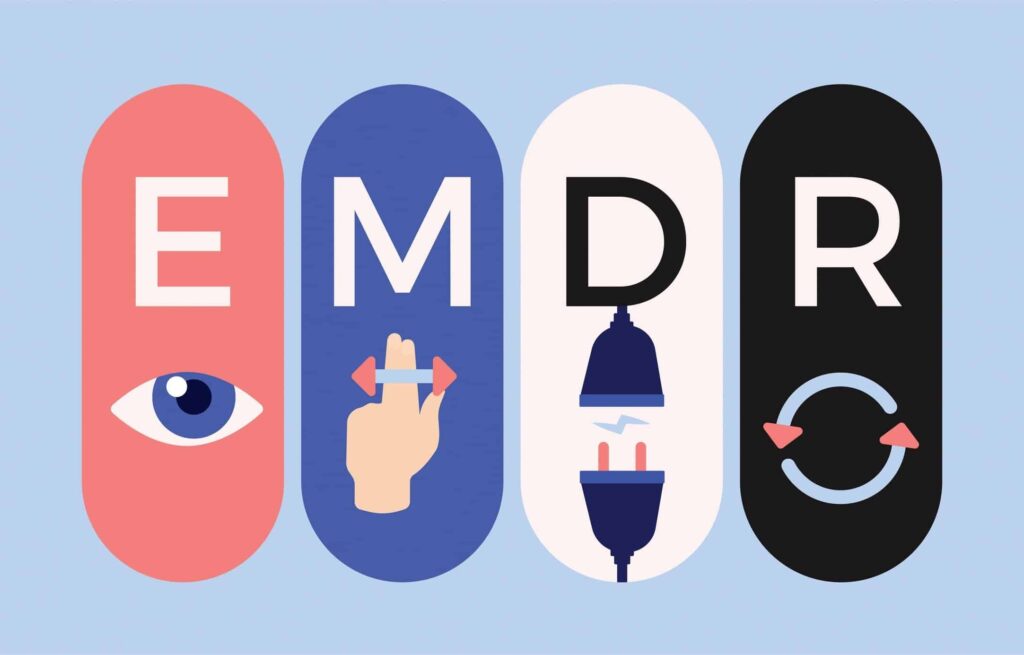
EMDR therapy (Eye Movement Desensitization and Reprocessing) is one approach that may help the brain complete some of this unfinished processing. Instead of requiring someone to retell their trauma in detail, EMDR gently guides the mind toward healing, often reducing the emotional intensity of the memory and supporting the body in releasing stored tension. Individual results vary.
What EMDR Therapy Is and Why It Supports Trauma Recovery
EMDR therapy is an evidence-based form of psychotherapy designed to help individuals work through the effects of traumatic experiences. It integrates psychology, neuroscience, memory reconsolidation, and bilateral stimulation—a method that alternates stimulation between the left and right sides of the body or brain.
This bilateral stimulation can be achieved through guided eye movements, alternating tapping, or gentle auditory tones. As this rhythmic pattern continues, the brain may become more able to access and reprocess traumatic memories without becoming overwhelmed.
Rather than removing or altering the memory, EMDR aims to reduce the emotional charge associated with it. The memory becomes something that happened—not something that continues to happen inside the emotional and physiological system.
At The Insight Clinic in Whitby, EMDR is used with individuals of all ages who are navigating trauma, PTSD, anxiety, grief, childhood trauma, and past experiences that continue to impact daily life. It is offered with a focus on safety, pacing, and respect for each person’s unique nervous system.
How EMDR Supports the Brain’s Healing Process
To understand EMDR’s impact, it helps to consider how the brain normally processes experiences. Under typical circumstances, the brain organizes memories into a structured narrative during REM sleep. Emotional intensity decreases, and memories become integrated parts of a person’s life story.
But traumatic events may interrupt this process. When the nervous system perceives severe threat, it prioritizes survival over processing. The brain can become too overwhelmed to sort the memory properly, leaving it fragmented and unintegrated. These fragments may later surface as intrusive thoughts, panic, emotional reactions, or physical tension.
EMDR stimulates both sides of the brain in a pattern similar to REM sleep, giving the mind an opportunity to continue some of the processing it could not complete at the time of the trauma. As the bilateral stimulation continues, the brain may begin connecting the fragmented parts of the experience. For some individuals, the memory becomes more coherent, its emotional severity may decrease, and the body may release some of its stored reactions. Belief systems can shift in a healthier direction.
Some people describe experiencing changes such as a sense of relief, feeling more grounded, or being able to recall the event with less emotional activation. Experiences vary from person to person.
What to Expect When Beginning EMDR Therapy
The EMDR process is structured into eight phases, but these phases unfold fluidly rather than rigidly. This ensures the therapy remains responsive to the individual’s emotional state and their nervous system’s needs.
1. History and Treatment Planning
The clinician begins by learning about the client’s background, current symptoms, major life events, emotional patterns, and sources of distress. This phase is not rushed. It involves deep listening, careful assessment, and the gradual building of trust. Together, therapist and client identify which memories or life patterns EMDR will focus on.
This stage also reveals strengths, coping strategies, and supportive relationships that may help stabilize the client during processing.
2. Preparation
Before any trauma reprocessing begins, the therapist ensures the client has strong grounding tools. Clients learn how EMDR works, what they may feel during sessions, and how to regulate themselves if emotions rise.
Preparation includes:
• deep breathing techniques
• grounding practices
• mindfulness strategies
• visualization of a “safe place”
• emotional regulation skills
This phase helps ensure clients have a sense of control and safety throughout therapy.
3. Assessment
Once the foundation is established, therapist and client select a target memory. The client identifies the image or moment that represents the memory’s core, along with the emotions, beliefs, and physical sensations attached to it. This gives the brain a clear starting point for reprocessing.
Feeling Tense, Fearful, or Overwhelmed?
Take a moment to explore what your anxiety may be telling you.
4. Desensitization
With bilateral stimulation active, the client focuses gently on the memory. Over time, the emotional intensity may begin to weaken. The mind naturally drifts through related thoughts, sensations, or memories, allowing the brain to integrate information it previously avoided or could not organize.
Some individuals notice shifts such as:
• reduced anxiety
• decreased physical tension
• new perspectives
• the memory feeling “farther away”
• softened emotional reactions
The therapist monitors the nervous system throughout to support safety and stability.
5. Installation
After distress around the memory decreases, the therapist helps the client strengthen positive beliefs that may replace old, trauma-driven narratives. For example:
• “I am powerless” becomes “I survived.”
• “I am unsafe” becomes “I can protect myself.”
• “It was my fault” becomes “I did the best I could.”
This phase supports the development of more adaptive self-beliefs.
6. Body Scan
Trauma often lives in the body as much as in the mind. Even when emotional distress drops, the body may still hold tension. The therapist guides the client through a gentle scan of their physical sensations. If discomfort remains, bilateral stimulation may help release it.
7. Closure
Each session ends with grounding exercises, emotional settling, and reflection. Even when a memory is still being processed, the session ends with stability and calm.
8. Reevaluation
At the start of each new session, the therapist and client review progress. EMDR is adaptive; the next steps are based on how the nervous system responded to previous sessions.
The Emotional Experience of EMDR Therapy
Unlike traditional talk therapy, EMDR may produce noticeable emotional shifts for some people. While the timeline varies, some individuals feel changes within the first few sessions. The intensity of processing depends on the individual, the type of trauma, and how the brain organizes memories.
People often notice feeling lighter or clearer after sessions, or that emotions which once felt overwhelming now feel more manageable. Others may find they respond differently to triggers or experience improved sleep, calmness, or a greater sense of internal space. These experiences are not universal, and responses vary.
Why EMDR Therapy Is Considered an Evidence-Based Trauma Treatment
EMDR is recognized by several major international health organizations, including:
• The World Health Organization
• The American Psychological Association
• Veterans Affairs Canada
• Trauma-focused research institutions worldwide
These organizations include EMDR among their recommended trauma treatments because research suggests it can be helpful for many individuals. However, effectiveness varies, and no therapy works the same way for everyone.
Research indicates EMDR may reduce:
• PTSD symptoms
• anxiety and panic
• emotional reactivity
• nightmares
• avoidance behaviours
• trauma-related negative self-beliefs
• physical tension and hypervigilance
Many individuals experience improvement, while others may benefit more from alternative or combined approaches.
EMDR Therapy in Whitby and the Durham Region
At The Insight Clinic, clinicians are trained in trauma-informed EMDR therapy that honours each person’s pace, boundaries, and lived experience. Trauma healing requires safety, and EMDR is offered with compassion and respect for the nervous system’s limits.
People from Whitby, Oshawa, Ajax, Pickering, and across the Durham Region seek EMDR therapy because they may want:
• relief from lingering trauma symptoms
• a non-invasive, evidence-based treatment
• a therapy that does not require retelling painful stories
• a structured yet flexible healing approach
• a clinician who understands trauma physiology
Every EMDR journey begins with a gentle conversation and a collaborative plan designed around the person—not the protocol.
Conclusion
Trauma does not always fade on its own simply because time passes. When the brain has been overwhelmed, it may need support to continue the healing that was interrupted. EMDR therapy offers a safe, structured approach that may help individuals reprocess traumatic experiences and move toward emotional balance.
Through its eight-phase process, EMDR may help reduce distress, shift negative beliefs, release bodily tension, and integrate the past in a way that supports strength rather than suffering. For many, it becomes possible to move forward—not by forgetting what happened, but by experiencing the memory with less emotional intensity.
At The Insight Clinic in Whitby and throughout the Durham Region, EMDR therapy is provided with empathy, clinical care, and respect for what individuals have endured. Support is available, and you do not need to navigate trauma alone.
Next Steps
Ready to explore EMDR therapy?
Contact The Insight Clinic in Whitby to schedule an appointment with one of our trauma-informed EMDR therapists serving Durham Region, Oshawa, Ajax, and Pickering.
Together, we can support your movement toward clarity, resilience, and emotional well-being.